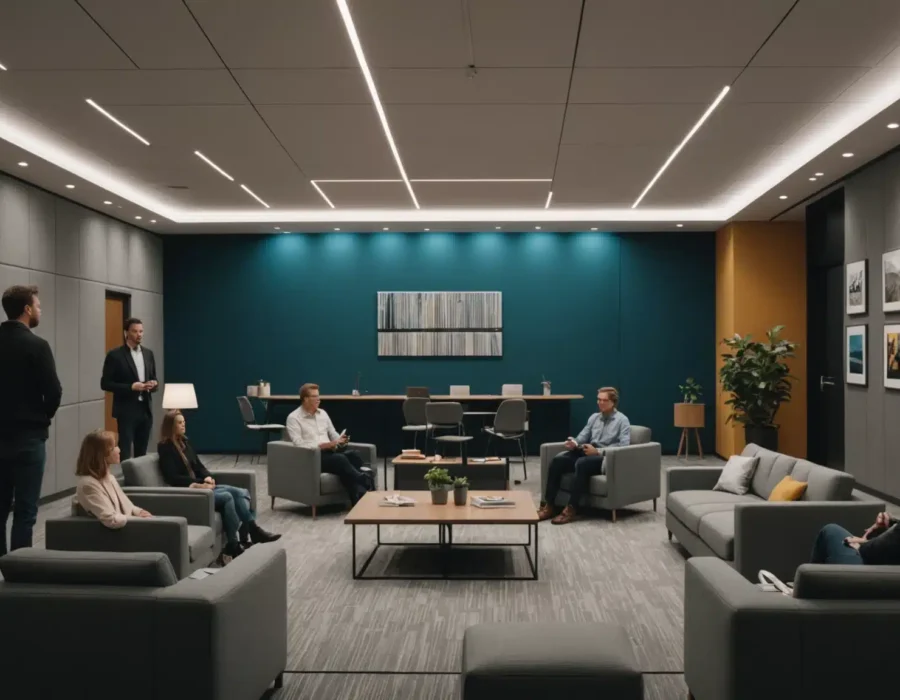
You’ve felt it before, haven’t you? Walking into a public space where the walls, ceiling, and even the floor seem to absorb every sound, where the neighbor’s conversation or the bustling room never disturbs your peace… There’s a real difference. It’s almost invisible, but you can feel it: acoustic quality is, in a way, the hallmark of a harmonious space.
We know this well, and you probably do too: soundproofing is what turns an ordinary shared experience into a pleasant and memorable one. And at your place—whether it’s your restaurant, your theater, or your shared workspace—do you make this a daily priority? Let’s ask ourselves the right questions together: how do you choose the acoustic solution that meets YOUR needs and fits OUR real-world situation? With our tips, you’ll easily find a custom soundproof curtain.
The Importance of Understanding Your Needs
Before we start brainstorming solutions, we need to fully understand what your space really needs. Acoustics isn’t just about the technical aspects—it’s about your brand image, your atmosphere, and your users, whom we aim to pamper. You can then choose a soundproof curtain.
What are the acoustic characteristics of the different areas in your home?
We sometimes have trouble distinguishing airborne noise from impact noise, too—do you always manage to tell them apart? A client told me he realized too late that the sound of heels on the floor of his café was drowning out conversations… when we thought we just needed to treat the wall. Airborne noise is the sound of speech and music floating through the air. Impact noise, on the other hand, travels through the structure: heavy footsteps, falling objects, vibrations. We must therefore analyze each room, each situation: is the atmosphere the priority, tranquility, or performance? And those reverberations that tire the ear, those waves that bounce too much—do you use them to create momentum in the room, or do you prefer effective absorption for your customers?
One non-negotiable point: regulations. Public-access facilities must strictly comply with rigorous standards—not only regarding safety, but also acoustic performance, the quality of insulation materials, sound absorption capacity, and more. Have you considered this? Customers, for their part, are just as demanding. Acoustic excellence becomes a hallmark of the venue; it impacts foot traffic, customer loyalty, and reputation. We’re talking about your success here.
Here are a few questions to help guide you:
How do you choose soundproofing? To insulate effectively, it all starts with identifying the need: airborne noise, impact noise, or both? You need to consider the type of home and the wall structure, then choose the appropriate insulation material: mineral wool, cellulose wadding, wood fiber, foam, or expanded cork. Each material offers different acoustic properties, varying levels of comfort, and varying degrees of effectiveness. The secret? Focus on the right thickness, density, mass, and proper installation. Nothing beats well-planned sound insulation.
What materials should you use for soundproofing? There are many soundproofing materials available, but each serves a specific purpose. Rock wool, wood fiber, batting, acoustic foam, cork, cellulose panels, or polyurethane panels: all of these limit noise transmission, with sound absorption capabilities that vary depending on density, thickness, and surface area. Bio-based materials are often more eco-friendly, but synthetic materials offer better value for money in some cases. The key is to choose the right one for your interior project.
Looking for the best soundproofing at the best price? If you’re seeking effective soundproofing without breaking the bank, opt for materials like rock wool or cellulose wadding. Good absorption, good sound attenuation, and variable thickness depending on your needs: this is a high-performance solution. For even more comfort, consider multilayer panels or mass-spring systems. They reduce noise while remaining reasonably priced depending on the area to be covered.
Soundproofing for what type of home? Whether it’s an older apartment, a modern house, a converted attic, or a downtown studio, each home requires its own specific approach. For a lightweight partition wall, choose a dense insulation material such as wood fiber or hemp wool. For ceilings or floors, opt for multilayer panels or acoustic tiles. The key is to adapt the material, thickness, and system (wood framing, drywall lining) to the existing structure and your specific noise issues.
How can I improve sound insulation?
Start by identifying the weak spots: shared walls, floors that echo, ceilings that are too thin. Next, you can install acoustic panels, add underlayment to the floor, or replace single-pane windows with double-pane ones. Mass plays a major role, so the denser the material, the better. Installation matters too: make sure there are no acoustic bridges, or else the whole system will fail. And don’t forget, good insulation material also provides thermal insulation. Total comfort comes from all of these factors combined.
What are the benefits of soundproofing?
Good soundproofing can completely transform your living environment. No more noise from neighbors, slamming doors, or conversations carried through the walls. You gain acoustic comfort, peace and quiet, and even increased property value. Plus, good soundproofing materials are often thermal as well: they also lower your energy bills. Less stress, better concentration, improved health: it’s a smart investment for your entire home, from floor to ceiling.
Have you ever faced sound-related challenges at your facility?
We all encounter unexpected noise disturbances: a packed restaurant, clattering cutlery, heated conversations, music blaring everywhere… Or perhaps you manage a performance venue, and you know how poor soundproofing can ruin everything? Personally, in a theater where we worked, every detail mattered: the curtain, the door, the fiberglass installed behind the panels, right down to the floor underlayment . The slightest poorly managed vibration, and the emotion on stage vanishes.
We battle this noise every day, because it takes a toll on our ability to relax, on our productivity and concentration, and even on our morale. A space designed to minimize noise pollution makes all the difference—who hasn’t breathed a sigh of relief in an open-plan office that’s suddenly quieter, or in a restaurant where conversation flows without having to raise your voice?
The custom-made Cotton Silence Pro acoustic curtain: much more than just soundproofing
At Cotton Silence Pro, we view soundproofing and acoustic insulation as an art form in its own right. Each custom acoustic curtain is designed to dampen noise, absorb sound waves, and effectively insulate every room. Thanks to a combination of multi-layered panels made of fiber, rock wool, cellulose wadding, and mineral foam, this curtain acts as a true insulating barrier.
It plays a key role in reducing noise pollution, whether airborne or impact-related, while improving thermal insulation. In addition to providing exceptional acoustic comfort, the curtain offers real energy savings and peace of mind in your home. High-performance, dense, and available in natural or synthetic materials to suit your needs, it meets the most demanding technical standards.
Perfect for homes, studios, or public spaces, it’s an elegant, accessible, and durable solution—and, above all, one that’s tailored to every project.
What materials should you choose for effective thermal and sound insulation?
Are you unsure about which acoustic insulation materials to choose? That’s normal—we’ve asked ourselves the same question a dozen times: mineral wool or foam? Cellulose wadding, panels, or bio-based insulation? Let’s figure it out together, step by step.
Which soundproofing materials should you choose?
Do you like things to be concrete? So do we. So, let’s take stock:
- Glass wool and rock wool: classic, proven, and easy to install in walls, ceilings, and floors. Choose the density and thickness that best suit your needs, and enjoy excellent value for money.
- Cellulose insulation: Are you into eco-friendly options? It’s also widely used in renovation projects, especially for attics. It can be installed by blowing it in or using panels, and its absorbency never ceases to amaze us.
- Expanded cork: Looking for a natural, sustainable, high-performance solution? We recommend it for spaces prone to impact noise. It’s more expensive, but the long-term benefits make it worth the investment.
- Do you prefer acoustic foam panels? Convenient for quick fixes or renovations, they can be installed anywhere and let you get creative with the design without compromising on effectiveness.
Performance of different products: what does the comparison reveal?
We all want to have a clearer picture before making a decision. Take a look at this comparison to get a better sense of the value for money offered by each option:
| Material | Airborne sound insulation | Impact sound insulation | Average price per square foot |
|---|---|---|---|
| Glass wool | High | Average | $10–$15 |
| Rock wool | High | Good | $15–$20 |
| Cellulose wadding | Average | Good | €20–€25 |
| Expanded cork | Good | High | €30–€35 |
How do you find the right soundproofing for you?
Every building has its own priorities, and you often know them better than we do on the ground: performance, aesthetics, ease of installation, compliance with standards, and budget. But have you ever considered how much the right choice of insulation materials affects your customers’ satisfaction? Your staff’s comfort? The longevity of your investment?
Performance goal: How far do you want to go?
Do you run a theater that places a premium on sound quality? The experience of Sophie, an acoustician, illustrates just how much the choice of rock wool in a cultural space can make all the difference… She told me that simply opting for this material—recommended for its density and high absorption—had transformed a tiresome “sound cube” into a space that enhances both music and speech.
In a modern open-plan office or a doctor’s office, we’ll focus on other criteria to reduce background noise, create partitions, and limit sound transmission, all while ensuring optimal indoor comfort.
Cost or acoustic performance: which should take precedence?
Let’s be honest: we’ve all been tempted to go with the cheapest option, especially when dealing with large volumes. But the cost difference quickly disappears if the solution you choose ends up requiring major repairs a few years down the line. Durability, ease of installation, added property value… it all comes into play.
| Material | Installation cost | Service life | Estimated ROI |
|---|---|---|---|
| Glass wool | Bottom | 10–15 years old | 7/10 |
| Rock wool | Medium | 20 years | 8/10 |
| Cellulose wadding | High | 25 years | 9 out of 10 |
| Expanded cork | Very high | 25+ years | 9 out of 10 |
People often ask themselves: Is it worth saving a little money now if it means sacrificing efficiency, moisture resistance, or ease of maintenance? You’re the one who experiences the answer firsthand every day.
Tips that make a difference in your acoustic projects
If you want to avoid unpleasant surprises, nothing beats the guidance of a team trained in thermal and sound insulation. We’ve learned—sometimes the hard way—that a thorough building assessment and careful planning make all the difference: forget about quick fixes; focus instead on the integrity of the insulation system.
Do you know the key steps?
At our company, every project begins with a thorough assessment: we analyze the wall, the structure, moisture levels, and material density. Once we’ve agreed on a plan, we discuss the installation method (suspended ceiling, panels, rolls, blown-in insulation, etc.), feasibility, and the timeline. We also enjoy working hand in hand with local craftsmen or trusted partners, precisely to ensure high-quality workmanship and compliance with industry standards.
What mistakes should you avoid so as not to undo all your hard work?
You’ve probably heard it before: “We rushed the insulation job, and it didn’t make a difference…” And for good reason. Even with the best acoustic insulation, a rushed installation or choosing a material unsuited to the type of flooring, walls, or ceiling can undo all your hard work… Paying close attention to every connection, every joint, and every underlayment is crucial. We never hesitate to recommend double-checking during major stages—because it’s better to make one adjustment than to have to correct it ten times. Who hasn’t regretted neglecting the finish or the thickness?
If these issues resonate with you, if your project deserves the best in terms of acoustic and thermal comfort, and if you want us to work together to create a harmonious and effective environment for your audience, let’s talk. It’s often the right question that leads to the best decision, isn’t it?
Your questions about the best soundproofing
What is the best soundproofing?
The best sound insulation is one that combines several effective insulating materials, such as rock wool, wood fiber panels, or cellulose wadding. These materials have the ideal density for reducing airborne noise. For optimal results, proper installation is also key: double-lined walls, suspended ceilings, and floors with acoustic underlayment. The goal is clear: reduce noise, improve comfort, and optimize thermal insulation at the same time.
What is the most effective soundproofing material?
Among insulation materials, rock wool remains a benchmark for both acoustic and thermal performance. Its thickness and density allow it to absorb vibrations and reduce noise pollution. Cellulose wadding and wood fiber also offer excellent sound-dampening properties. It all depends on the substrate, the type of noise (airborne, impact), and the room to be insulated. The right choice always depends on your needs and budget.
What is the best insulation for soundproofing?
The most effective sound insulation is based on the mass-spring-mass principle. Heavy materials such as rock wool are combined with a flexible structure, with an air gap or an intermediate panel. This absorbs the sound wave and disperses it. In renovation projects, rolls of batting or high-density acoustic panels are simple and effective options. Good insulation improves comfort while reducing energy loss.
What is the best soundproofing material?
The best soundproofing material depends on the situation. For walls, rock wool or wood fiber is recommended. For floors, expanded cork or dense foam. The ceiling can accommodate a drop ceiling with mineral panels. What matters: the sound reduction index, density, thickness, and suitability for the specific conditions of the space. Good soundproofing also provides lasting thermal comfort and minimizes heat loss.
How can I completely soundproof a room?
To achieve complete soundproofing, every surface must be treated: soundproof panels on the walls, underlayment on the floor, a suspended ceiling, and double-glazed acoustic windows. The key is the combination of insulation materials: mineral wool, acoustic foam, or cellulose wadding. The goal is to block noise, absorb sound waves, and limit transmission. You must also watch for sound bridges, seal gaps, and install each panel carefully.
What is the difference between soundproofing and acoustic insulation?
Soundproofing aims to prevent noise from traveling from one space to another (neighborhood noise, traffic), while acoustic treatment seeks to improve the sound within a room (preventing echoes, optimizing listening conditions). The same insulation materials are often used—rock wool, wood panels, and batting—but they are installed differently depending on the desired effect. The right system is the one that suits the room’s purpose and meets your expectations.