
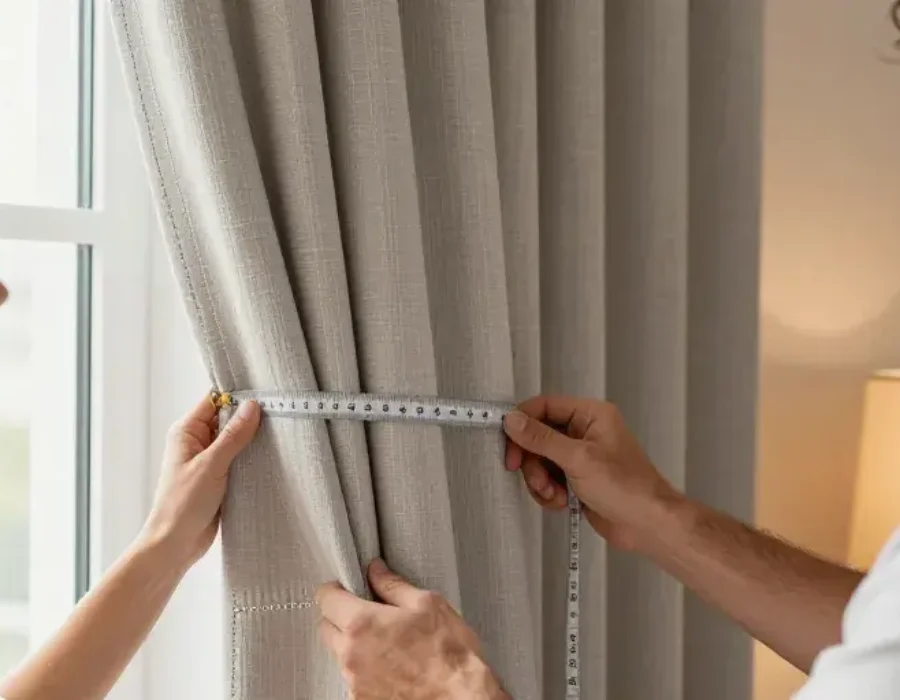
Handy curtain tip
- Recommended curtain rod length: Allow 150–160 cm for a 120-cm window to leave space around the frame and allow light to pass through without obscuring the glass.
- Magnification factor: Choose 1.0–1.2× for coverage, 1.4× for standard use, or 1.5–2.0× for generous draping, depending on the intended use.
- Cotton Silence: offers custom acoustic curtains, including on-site measurements and installation, to ensure effective sound insulation and a precise drape.
A 120-cm window often requires a 150–160-cm curtain rod to properly clear the frame and allow light in from the sides. Choosing the width of the curtain comes down to deciding between a snug fit or a generous drape. This article provides specific measurements, detailed scenarios, and practical options for ordering or cutting your panels. So how do you install thermal insulation curtains?

The recommended curtain width for a 120-cm window, depending on the desired effect
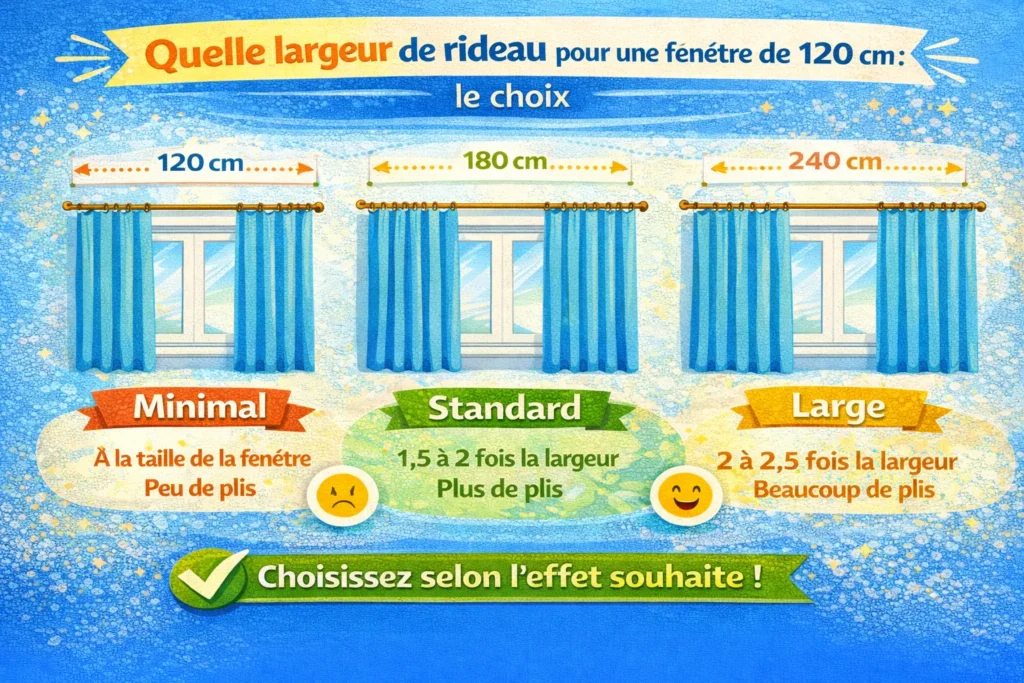
For a 120-cm window, use a curtain rod that is 150–160 cm long to allow for 15–20 cm of fabric on each side. When it comes to fabric width, there are three options: minimal coverage, standard drape, and gathered. Choose the width multiplier based on the desired look and functionality.
Calculate the rod length by adding 15–20 cm to each end
Measure the window from left to right to get the standard 120 cm. Then add 15–20 cm on each side to ensure the curtain doesn’t block the light when it’s open. For a 120 cm window, a 150–160 cm rod is the most practical option and the one you’ll typically find in stores.
The appropriate scale factor for gathers, pleats, and eyelets
The fabric yield factor determines how much fabric is needed per window width. For a tight drape , allow 1.0–1.2×; for a balanced look with grommets or round pleats , allow 1.4×. For generous gathers, opt for 1.5–2.0× depending on the desired fullness.
| script | Recommended fabric width | Order fabric (140 cm roll) |
|---|---|---|
| minimum coverage | 140 cm | 0.30 m (1 panel measuring 140 cm) |
| standard rendering (1.5×) | 180 cm | 0.40 m (2 panels in a 140 cm modular system) |
| gathered (2×) | 240 cm | 0.60 m (assembled on a 140 cm roll) |
| sheer + blackout option | 360 cm jumpsuit | 1.00 m (overlap on 140 cm roll) |
Selecting panels and determining the number and width of the panels
After determining the total width, convert it into panels by referring to standard fabric widths and ease of installation. Most interiors prefer two panels for symmetry and a centered opening. For cold windows or those requiring insulation, consider technical options such as custom thermal curtains to add a thermal and acoustic barrier.
The choice of the number of panels depends on the fabric width and the desired aesthetic
Opt for two panels if you want a simple opening and a balanced look. Use more panels if the fabric is heavy or if you want a pleated look without visible seams. Choose panel widths within the standard range of 70–150 cm to avoid costly cutting and to make returns easier if you order in-store.
Height adjustment and its effect on the drape and visual fullness
Position the curtain rod 10–15 cm above the window frame to make the window appear taller. Consider the bottom hem: some prefer curtains that reach the floor, while others prefer them to end at the windowsill, depending on usage and maintenance. The height affects the perception of space; a higher curtain makes the room feel more spacious.
The Cotton Silence solution for custom-made, stylish acoustic curtains
Cotton Silence offers multi-layered acoustic curtains made in France and designed to combine style with performance. The brand claims sound absorption levels of up to -31.4 dB, depending on the model and installation, and offers more than 70 colors to complement any interior. Handcrafted construction and a custom measurement service ensure a precise drape and effective sound insulation.
Architects and building managers often turn to this product line when acoustic comfort becomes a design constraint. From meeting rooms to studios, professional clients seek measurable solutions. Homeowners exposed to street noise or dealing with poorly insulated rooms choose the same product line for its dual aesthetic and technical benefits.
A comparison of Cotton Silence products by performance and use
1/ Multi-layer acoustic: high sound absorption for noisy rooms and studios, performance up to -31.4 d2/ Blackout: complete darkness and sound reduction, ideal for bedrooms and home theaters. 3/ Thermal: improved energy insulation with additional acoustic benefits.
Measurement service and professional installation included
Cotton Silence offers a turnkey service that includes measurements, manufacturing, and installation by trained technicians. Customers receive a customized quote and an installation tailored to maximize sound absorption and drape. This level of service prevents common installation errors and ensures the advertised performance.
For a 120-cm window, order the rod and then consult an expert to determine the appropriate drape width for your decor. This will help you avoid incorrect cuts and mismatched fabrics. Professional measurements are the best way to ensure a long-lasting and effective result.
In short
How do you calculate the correct curtain width?
A little reminder: the first curtain rod was installed crooked, and the curtain hung like a sheer, but you learn quickly. For width, measure the rod, add about 20 cm on each side, and choose curtains that are 1.5 to 2 times wider to achieve a nice pleat. For height, mount the rod 10 to 15 cm above the window, measure down to the floor, then decide on a clean, straight drop or a crisp, angular drape depending on the desired effect. The Madura curtain size guide follows these guidelines. After a few tries, the window regains its character—a small DIY victory. We adjust, we laugh, we start over.
What width of curtain should I choose for a 130-cm window?
130 cm window: the first practical consideration is that the ideal width depends on the desired look. As a general rule, aiming for 1.5 to 2 times the width of the window creates a pleated effect, so for a 130 cm window, allow for about 195 to 260 cm of fabric in total. If using a two-panel curtain, divide this by two, and account for the hem and the rod allowance. Standard sizes, such as 135×260 cm or 135×300 cm, are close, but sometimes adjustments will be needed. Ombre Interieur highlights these guidelines, and ultimately, it’s better to have a little extra fabric than a tight curtain—and take pride in the result.
Where should the curtains end?
I remember a curtain that was too short, an evening when it hung awkwardly, and the pride I felt when I finally fixed it. In practice, you should install the rod 15 cm above the window, but if mounting it 20 cm up looks better, go for it. For the length, choose floor-length for a clean look, or a few centimeters longer for a more relaxed, cozy effect. To get it just right, try hand-sewing or iron-on hem tape—tried and tested. The BUT blog asks whether curtains should touch the floor; the answer depends on the style and your personal preference.
What is the standard width of curtains?
When you’re rummaging through your fabric stash and wondering if you have enough, standard sizes often come to the rescue. Common sizes include 135×260 cm and 135×300 cm, which work well for many windows and help you avoid too much fiddling around. These sizes are listed in Bouchara’s guide on how to choose the right curtain size, but there’s nothing stopping you from altering, shortening, or adding piping. The advantage is that by sticking to standard sizes, you save time, and if something’s off, a quick stitch and voilà—instant pride, tested and approved, and a sense of satisfaction shared.